Chicory Root Inulin for Weight Loss: How It Works, Dosage & What to Look For on a Label

Updated August 23, 2026 · reviewed by the SodaLean Research Team
| What it is | Chicory root inulin is a prebiotic fibre — food for the beneficial bacteria in your lower gut. |
| How it helps weight | It supports fullness and steadier appetite, and feeds bacteria that produce helpful metabolites. |
| Typical dose | Research spans roughly a few grams up to ~10 g/day; start low and build up slowly. |
| Label tip | Look for a named source (chicory/Cichorium intybus) and a clear per-serving amount. |

If you have scanned the label of a modern gut or weight-management supplement, there is a good chance you have seen chicory root inulin near the top of the list. It has quietly become one of the most researched prebiotic fibres in nutrition science — and for good reason. Rather than trying to force weight change through stimulants or appetite suppression, inulin works with the ecosystem already living inside you. This guide explains, in plain language, what chicory root inulin actually is, the mechanism behind how it supports healthy weight, how much people typically use, and exactly what to check on a label so you are not paying for a fibre you cannot verify.
What is chicory root inulin?
Inulin is a type of soluble fibre known as a fructan — a chain of fructose molecules linked together in a way your own digestive enzymes cannot break apart. That is the whole point. Because you cannot digest it in the stomach and small intestine, inulin travels intact all the way to your large intestine, where the bulk of your gut bacteria live. There, it becomes a preferred food source for beneficial microbes.
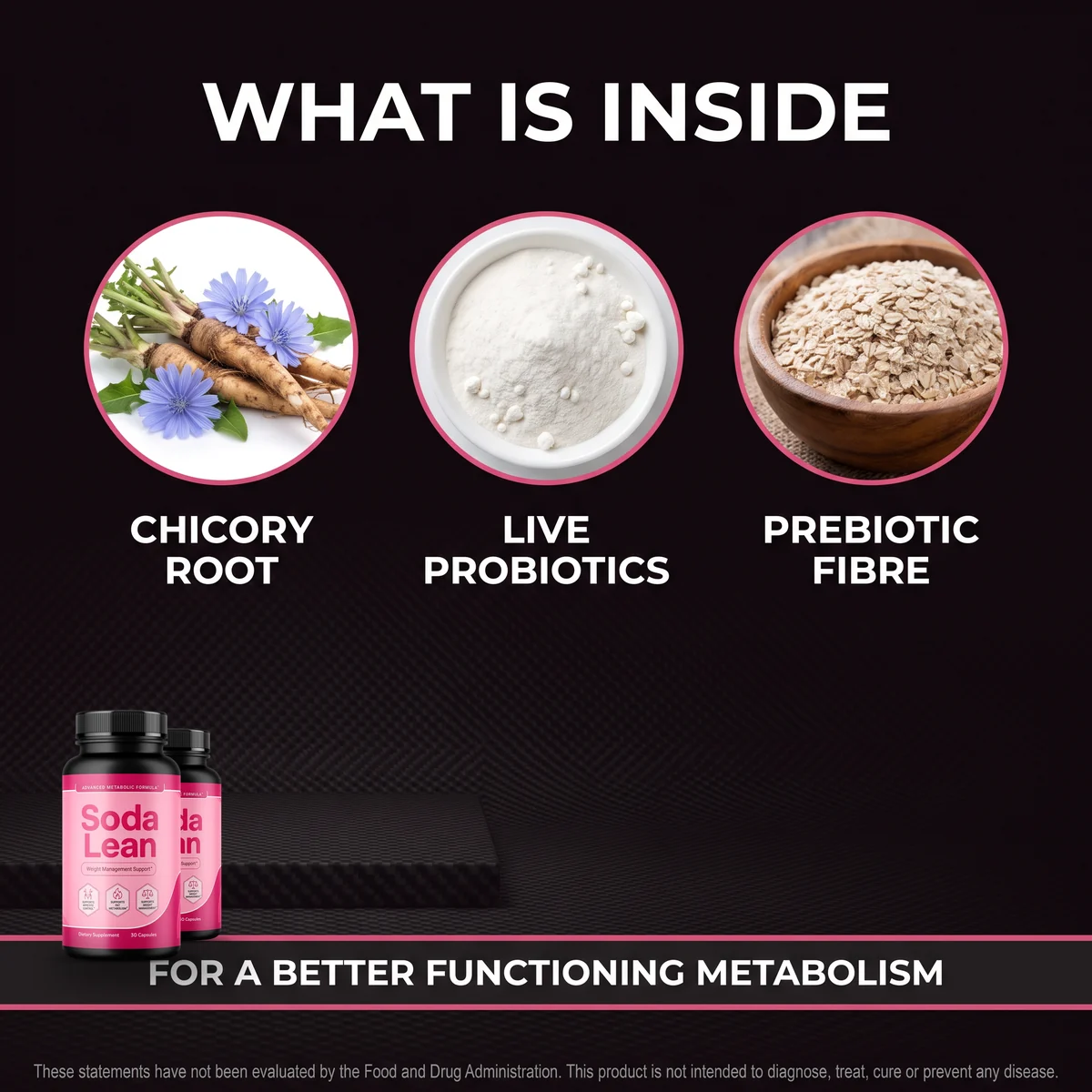
Chicory (Cichorium intybus) is simply one of nature's richest sources of this fibre, which is why nearly all supplemental inulin is concentrated from chicory root. The same fibre appears in smaller amounts in everyday foods — onions, garlic, leeks, asparagus, Jerusalem artichokes and slightly underripe bananas — but you would need to eat a large volume of them to match what a measured supplement can deliver. In SodaLean, chicory root inulin is the largest single active, listed on the label at 211 mg per capsule alongside potato resistant starch and a live probiotic blend.
How chicory root inulin supports weight management
It helps to be honest up front: inulin is not a fat burner, and no reputable source should claim it melts away weight on its own. What the research does support is a set of gentle, cumulative mechanisms that make everyday weight management more sustainable. Here is what is actually happening.
1. It feeds the bacteria that shape your metabolism
This is the defining trait of a prebiotic. When beneficial bacteria — particularly Bifidobacteria — ferment inulin, they multiply and produce short-chain fatty acids (SCFAs) such as acetate, propionate and butyrate. These metabolites do real work: they nourish the cells lining your colon, help maintain a healthy gut barrier, and send signals that influence appetite and how your body handles energy. We cover this pathway in depth in our guide to butyrate and short-chain fatty acids.
2. It supports fullness and steadier appetite
Soluble fibres like inulin add gentle bulk and slow the pace at which the stomach empties, which can help a meal feel more satisfying. Just as importantly, the SCFAs produced during fermentation are linked to the release of satiety hormones such as GLP-1 and PYY — the body's own "I've had enough" signals. Several appetite studies have found that people report feeling fuller and, in some cases, eating slightly less at later meals after regular inulin intake. Steadier appetite is often the difference between a plan you can stick to and one you cannot.
3. It supports how you handle everyday carbohydrates
By slowing digestion and feeding SCFA-producing bacteria, inulin is associated with gentler, more even blood-sugar responses to meals in some research. Smoother post-meal energy tends to mean fewer sharp crashes — and fewer of the cravings that crashes trigger.
Prebiotic fibre and probiotics: better together
Inulin is most useful when there are beneficial bacteria present to eat it. That is why thoughtfully designed formulas pair prebiotic fibres with live probiotic strains — an approach often called a synbiotic. The prebiotic feeds the probiotic; the probiotic does the metabolic work. If you are choosing a product, it is worth understanding this pairing, which we break down in our guide to how to read a gut health supplement label. For a bigger-picture view of how the whole microbiome connects to your waistline, see how gut health affects weight loss.
How much chicory root inulin should you take?
There is no single official dose, and the honest answer is "it depends on the goal and your tolerance." A few reference points from the research and from common practice:
- ✓ Appetite and gut studies have used a broad range, frequently from a few grams up to about 10 grams of inulin per day.
- ✓ Start low, go slow. The most common mistake is starting at a high dose. Begin with a smaller amount and increase over a couple of weeks so your bacteria — and your comfort — can adapt.
- ✓ Blended formulas use less by design. A capsule that combines inulin with resistant starch and probiotics may list a smaller per-serving inulin amount than a standalone fibre scoop. That is intentional; the ingredients are meant to work as a team, not to out-dose one another.
- ✓ Consistency beats intensity. The microbiome rewards a steady daily habit far more than an occasional large dose.
Whatever product you choose, follow the label directions. In SodaLean's case, the entire routine is a single vegetarian capsule taken with an 8 oz glass of water — deliberately simple so the habit actually sticks.
Prebiotic fibre in one simple capsule
SodaLean™ pairs chicory root inulin and potato resistant starch with a three-strain live probiotic blend — a gut-first, once-daily formula backed by a 60-day money-back guarantee.
See SodaLean Packages
Most people choose a 3- or 6-bottle supply so they do not run out mid-routine, since gut support builds gradually.
What to look for on a chicory root inulin label
Fibre supplements vary enormously in quality and transparency. Before you buy, run down this short checklist:
- ✓ A named, specific source. Look for "chicory root inulin" or the botanical name Cichorium intybus, not just a vague "prebiotic blend" with no origin.
- ✓ A clear per-serving amount. The Supplement Facts panel should tell you how many milligrams or grams you get. Hidden amounts inside a proprietary blend make it impossible to compare products.
- ✓ Sensible pairings. Inulin alongside another prebiotic (such as resistant starch) and named probiotic strains suggests a formula designed as a synbiotic system.
- ✓ Clean "other ingredients." A short list — a vegetarian capsule, a flow agent or two — is a good sign. Long lists of fillers, sweeteners and dyes are not.
- ✓ Quality signals. Manufacturing in an FDA-registered, GMP-certified facility and non-GMO sourcing tell you the maker takes standards seriously.

Who should be cautious?
Inulin is well tolerated by most people, but a few groups should take extra care. Those with a diagnosed sensitivity to fructans or a medical reason to follow a low-FODMAP diet may find inulin aggravating and should speak with a clinician first. Anyone who is pregnant or nursing, under 18, or managing a health condition or medication should check with a qualified healthcare professional before adding any new supplement. And if you notice persistent digestive discomfort, ease back on the dose and build up more slowly.
How to get the most from prebiotic fibre
Pair it with real food. A supplement is a helpful floor, not a ceiling. Keep eating a variety of plants across the week so your bacteria stay diverse and well fed.
Hydrate. Soluble fibre works best with adequate water; it also makes the early adjustment period more comfortable.
Be patient. The microbiome can begin shifting within days, but meaningful, steady change builds over several weeks of consistency. Judge the habit over a month or two, not a day or two.
Stack the basics. Fibre pays off most when it sits on a foundation of decent sleep and regular movement — the same habits that support the appetite hormones inulin nudges in the right direction.
The bottom line
Chicory root inulin will not do the work for you, and it should never be sold as a shortcut. What it does is more durable than a shortcut: it feeds the beneficial bacteria that quietly influence appetite, energy and how your body handles food, while supporting the kind of steady fullness that makes a sensible plan easier to keep. Choose a product that names its source, states its dose, and pairs the fibre with researched probiotic strains — then give it the weeks of consistency it needs to earn its place in your routine.
This guide was written and fact-checked by the SodaLean Research Team — an independent group focused on gut health, metabolism and evidence-based weight management — and medically reviewed by Emily Gottfried. We read the primary research, translate it into plain language, and flag hype wherever we find it. We never promise miracle results, only clear, accurate information you can act on. Spotted something to correct? Email [email protected].
Frequently asked questions
Does chicory root inulin actually help with weight loss?
Inulin is not a fat burner. It is a prebiotic fibre that feeds beneficial gut bacteria and adds gentle bulk and fermentation that can support fullness and steadier appetite. In research, higher fibre intakes are consistently linked with easier weight management, but inulin works best alongside a sensible diet, movement and sleep rather than on its own.
How much chicory root inulin should I take per day?
Studies on appetite and gut effects have used a wide range, often from a few grams up to about 10 grams daily. Many people do best starting low and increasing slowly to let the gut adapt. Supplements that pair inulin with other prebiotics and probiotics may use smaller per-capsule amounts by design, so read the label and follow the directions.
Can inulin cause bloating or gas?
Because inulin is fermented in the lower gut, some people notice temporary gas or bloating when they first start, especially at higher doses. Starting with a smaller amount, drinking plenty of water and building up gradually usually helps the gut adjust within a couple of weeks.
Is chicory root inulin the same as the fibre in food?
Chicory root is simply one of the richest natural sources of inulin, a fibre also found in onions, garlic, leeks, asparagus and bananas. Supplemental inulin is concentrated from chicory root, so a small daily amount can deliver what would take a large volume of vegetables to match.
When is the best time to take an inulin supplement?
There is no single required time. Many people take inulin with a glass of water at a consistent time each day so it becomes a habit. Taking it with or before a meal may support the feeling of fullness at that meal, but consistency day to day matters more than exact timing.
References
- Gibson GR, et al. “Expert consensus document: The International Scientific Association for Probiotics and Prebiotics (ISAPP) consensus statement on the definition and scope of prebiotics.” Nature Reviews Gastroenterology & Hepatology, 2017.
- Hume MP, et al. “Prebiotic supplementation improves appetite control in children with overweight and obesity: a randomized controlled trial.” The American Journal of Clinical Nutrition, 2017.
- Cani PD, et al. “Gut microbiota fermentation of prebiotics increases satietogenic and incretin gut peptide production.” The American Journal of Clinical Nutrition, 2009.
- Koh A, et al. “From dietary fiber to host physiology: short-chain fatty acids as key bacterial metabolites.” Cell, 2016.
- Slavin J. “Fiber and prebiotics: mechanisms and health benefits.” Nutrients, 2013.
† These statements have not been evaluated by the Food and Drug Administration. This product is not intended to diagnose, treat, cure or prevent any disease. This article is for general information only and is not medical advice; consult a qualified healthcare professional before making changes to your diet or supplement routine.