Akkermansia Muciniphila Benefits: The Next-Generation Probiotic for Metabolic Health

Updated August 23, 2026 · reviewed by the SodaLean Research Team
| What it is | A beneficial gut bacterium that lives in the intestinal mucus layer and helps guard the gut barrier. |
| Why it matters | A healthy abundance is linked with a strong gut barrier and more favourable metabolic markers. |
| The research | A human pilot study reported supportive effects on metabolic measures — promising, not a cure. |
| Feed it | Prebiotic fibres and polyphenol-rich foods help this strain thrive. |
For decades, "probiotic" meant a familiar handful of names — mostly Lactobacillus and Bifidobacterium. Then a quieter resident of the gut stepped into the spotlight: Akkermansia muciniphila. Discovered relatively recently and now among the most studied bacteria in metabolic research, it is one of the flagship "next-generation" probiotics. This guide explains what Akkermansia actually does, what the human research shows (and does not show), the curious live-versus-pasteurized question, and how to make sense of it on a supplement label.
What is Akkermansia muciniphila?
Akkermansia is a beneficial bacterium that lives in a very specific neighbourhood: the mucus layer that lines your intestine. That mucus is a crucial part of your gut barrier — the thin, living wall that decides what stays in your gut and what passes into your body. Akkermansia feeds on components of this mucus and, in doing so, actually signals your gut to keep producing a healthy, well-maintained layer. In other words, it helps tend the very barrier it lives in.
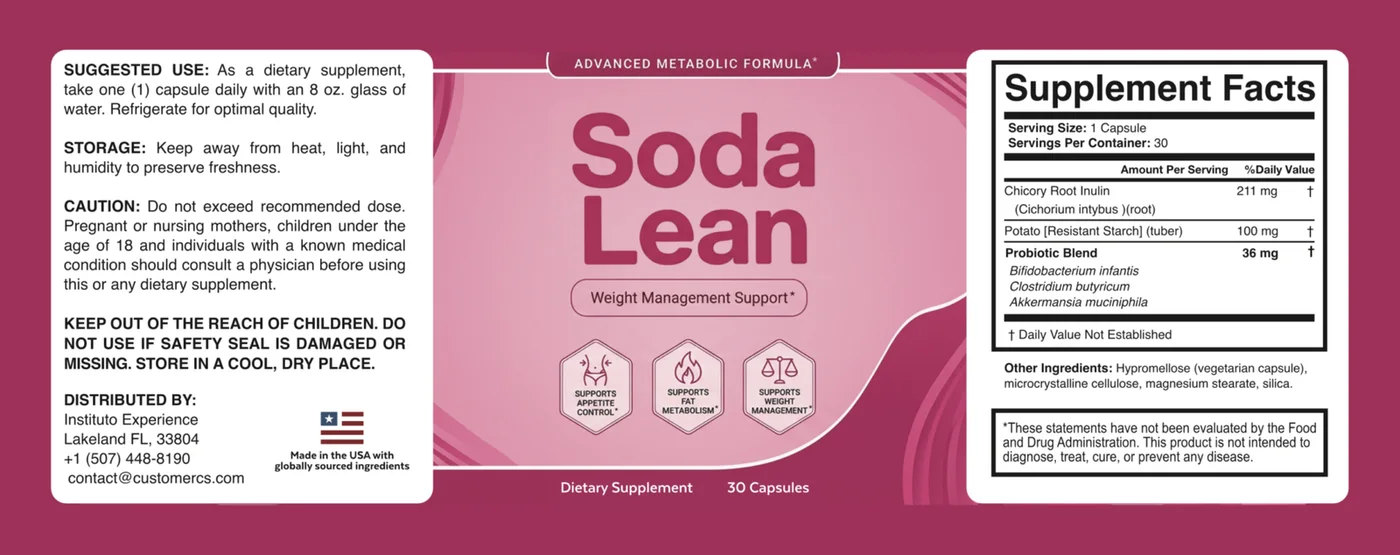
It is often called a next-generation probiotic because it was characterised and cultured for study more recently than the classic strains, and because growing it well outside the body is technically demanding. In SodaLean it appears within the label's live probiotic blend, alongside Bifidobacterium infantis and Clostridium butyricum, and paired with the prebiotic fibres that help feed strains like it.
How Akkermansia supports metabolic health
1. It helps guard the gut barrier
A strong, intact gut barrier keeps the contents of your gut where they belong. When that barrier weakens, fragments of bacteria can leak through and trigger the kind of low-grade, background inflammation that researchers associate with sluggish metabolism. By helping maintain a thick, healthy mucus layer, Akkermansia is linked with a more resilient barrier — one reason it attracts so much metabolic interest.
2. It is associated with healthier metabolic markers
Across many observational studies, a higher natural abundance of Akkermansia tends to travel with more favourable metabolic markers, while a lower abundance is more often seen alongside metabolic struggles. Association is not proof of cause — but the pattern is consistent enough that scientists went looking for it in controlled trials.
3. The landmark human pilot study
In 2019, researchers published a widely cited proof-of-concept trial in overweight and obese volunteers, supplementing with Akkermansia over three months. The study reported that supplementation was safe and well tolerated and was associated with supportive changes in several metabolic measures. It was a small, early study — a promising first step, not the final word, and certainly not a treatment for any disease. Larger trials continue. The honest framing is: encouraging, worth watching, and best understood as one supportive piece of an overall healthy routine.

Live vs pasteurized Akkermansia: a surprising twist
With most probiotics, "alive" is the whole point. Akkermansia complicated that assumption. In the same line of research, a pasteurized (heat-treated) form performed at least as well as the live form on some metabolic measures — and in certain respects appeared even more effective. The leading explanation is that a specific protein on the surface of the bacterium, which survives gentle pasteurization, is responsible for part of the benefit. The practical takeaway: both live and pasteurized forms appear in modern products, and "not alive" does not automatically mean "not useful" for this particular strain. It is a reminder that with next-generation probiotics, the details of the strain matter more than slogans.
A next-generation blend, fed by prebiotic fibre
SodaLean™ brings together a three-strain live probiotic blend with chicory root inulin and potato resistant starch — a gut-first, once-daily capsule backed by a 60-day money-back guarantee.
See SodaLean Packages
Probiotic support builds with consistency, so most people choose a 3- or 6-bottle supply.
How to feed Akkermansia naturally
Whether or not you take a supplement, you can cultivate an environment this strain prefers. Because Akkermansia thrives on mucus, and because a diverse, fibre-rich gut supports healthy mucus production, the habits overlap neatly with general gut health:
- ✓ Prebiotic fibre. Fibres like chicory root inulin support the microbial environment that favours Akkermansia — see our guide to chicory root inulin for weight loss.
- ✓ Polyphenol-rich foods. Grapes, cranberries, berries and green tea are among the foods linked with a healthier Akkermansia abundance.
- ✓ Regular movement. Consistent, moderate activity is associated with greater microbial diversity overall.
- ✓ A butyrate-friendly gut. Because the whole ecosystem is interconnected, supporting butyrate-producers helps too — more in our guide to butyrate and short-chain fatty acids.
How to read Akkermansia on a label
- ✓ The full name. Look for Akkermansia muciniphila, not just "next-gen probiotic," ideally with a strain identifier.
- ✓ A stated amount or cell count. A transparent product tells you how much you are getting.
- ✓ Prebiotic pairing. Listing Akkermansia within a probiotic blend alongside prebiotic fibres shows the formula is designed as a synbiotic that feeds the strains it delivers.
- ✓ Quality signals. An FDA-registered, GMP-certified facility and non-GMO sourcing suggest a maker held to real standards.
For a complete walkthrough of every line on a Supplement Facts panel, see our guide to reading a gut health supplement label.
Who should be cautious?
Probiotics are generally well tolerated, but they are not right for everyone in every situation. People who are seriously ill, immunocompromised, or being treated for a medical condition should always speak with a clinician before starting a probiotic. The same goes for anyone who is pregnant or nursing, under 18, or taking medication. Akkermansia is a beneficial part of a healthy gut for most people — but as with any supplement, personal medical guidance comes first.
The bottom line
Akkermansia muciniphila earned its "next-generation" label the hard way — through genuine science rather than marketing. It tends the gut's mucus barrier, is consistently associated with healthier metabolic markers, and showed enough promise in an early human trial to keep researchers busy. It is not a magic bullet, and no responsible source should sell it as one. But as part of a well-designed synbiotic — fed by prebiotic fibres, supported by a diverse diet and everyday movement — it is one of the more compelling ingredients in modern gut-health nutrition. For the wider context, see how the whole picture fits together in how gut health affects weight loss.
This guide was written and fact-checked by the SodaLean Research Team — an independent group focused on gut health, metabolism and evidence-based weight management — and medically reviewed by Emily Gottfried. We read the primary research, translate it into plain language, and flag hype wherever we find it. We never promise miracle results, only clear, accurate information you can act on. Spotted something to correct? Email [email protected].
Frequently asked questions
What is Akkermansia muciniphila?
Akkermansia muciniphila is a beneficial gut bacterium that lives in the mucus layer lining the intestine, where it helps keep that protective barrier healthy. It is often called a next-generation probiotic because it was studied and characterised more recently than traditional strains like Lactobacillus and Bifidobacterium.
How does Akkermansia support metabolic health and weight?
Akkermansia helps maintain a strong gut barrier, which is associated with lower background inflammation. Research has also linked a healthy abundance of Akkermansia with more favourable metabolic markers. A widely cited human pilot study reported supportive effects on metabolic measures, though it is not a treatment for any condition and works best as part of an overall healthy routine.
What is the difference between live and pasteurized Akkermansia?
Live Akkermansia contains viable cells, while pasteurized Akkermansia has been heat-treated. Intriguingly, a human pilot study found the pasteurized form performed at least as well as the live form on some metabolic measures, suggesting components of the bacterium itself, not only its being alive, may matter. Both forms appear in modern products.
Can I increase Akkermansia naturally?
Yes. Feeding your gut with prebiotic fibres and polyphenol-rich foods is associated with a healthier abundance of Akkermansia. Prebiotics such as chicory root inulin, plus foods like grapes, cranberries and green tea, along with regular movement, all support the environment this strain prefers.
How do I read Akkermansia on a supplement label?
Look for the full name, Akkermansia muciniphila, ideally with a strain identifier, and a stated amount or cell count. In a blended synbiotic formula it may be listed as part of a probiotic blend alongside prebiotic fibres that help feed it. Manufacturing in an FDA-registered, GMP-certified facility is a good quality signal.
References
- Depommier C, et al. “Supplementation with Akkermansia muciniphila in overweight and obese human volunteers: a proof-of-concept exploratory study.” Nature Medicine, 2019.
- Everard A, et al. “Cross-talk between Akkermansia muciniphila and intestinal epithelium controls diet-induced obesity.” Proceedings of the National Academy of Sciences, 2013.
- Cani PD, de Vos WM. “Next-generation beneficial microbes: the case of Akkermansia muciniphila.” Frontiers in Microbiology, 2017.
- Plovier H, et al. “A purified membrane protein from Akkermansia muciniphila or the pasteurized bacterium improves metabolism in obese and diabetic mice.” Nature Medicine, 2017.
- Zhou K. “Strategies to promote abundance of Akkermansia muciniphila, an emerging probiotic in the gut.” Journal of Functional Foods, 2017.
† These statements have not been evaluated by the Food and Drug Administration. This product is not intended to diagnose, treat, cure or prevent any disease. This article is for general information only and is not medical advice; consult a qualified healthcare professional before making changes to your diet or supplement routine.