Bifidobacterium Lactis Benefits for Weight Loss: Strains, Mechanism & Dosage

Updated August 23, 2026 · reviewed by the SodaLean Research Team
| What it is | Bifidobacterium lactis is a hardy, well-studied probiotic species that naturally lives in the human gut. |
| How it may help weight | It supports digestion, regularity and a balanced gut barrier — the groundwork for steadier appetite and metabolism. |
| Typical dose | Studies span roughly 1–10+ billion CFU/day per strain; blends share the total across strains by design. |
| Label tip | Look for a full strain name, a CFU count guaranteed through the expiry date, and a paired prebiotic. |

If you have compared a few gut or weight-management supplements, you have almost certainly seen Bifidobacterium lactis on the label — often written as B. lactis, BB-12 or HN019. It is one of the most widely consumed and best-studied probiotic species on earth, found in everything from yoghurt to premium synbiotic capsules. This guide explains, in plain language, what Bifidobacterium lactis benefits for weight loss actually look like, the real mechanisms behind them, how much research trials tend to use, and exactly what to check on a label so you are not paying for bacteria you cannot verify.
What is Bifidobacterium lactis?
Bifidobacterium lactis (more precisely Bifidobacterium animalis subspecies lactis) is a species of beneficial bacteria that belongs to the Bifidobacterium genus — a group of microbes that colonise the human gut from the first days of life and remain important residents into adulthood. Bifidobacteria are among the "good guys" whose numbers tend to fall with a low-fibre Western diet, ageing, stress and antibiotics.
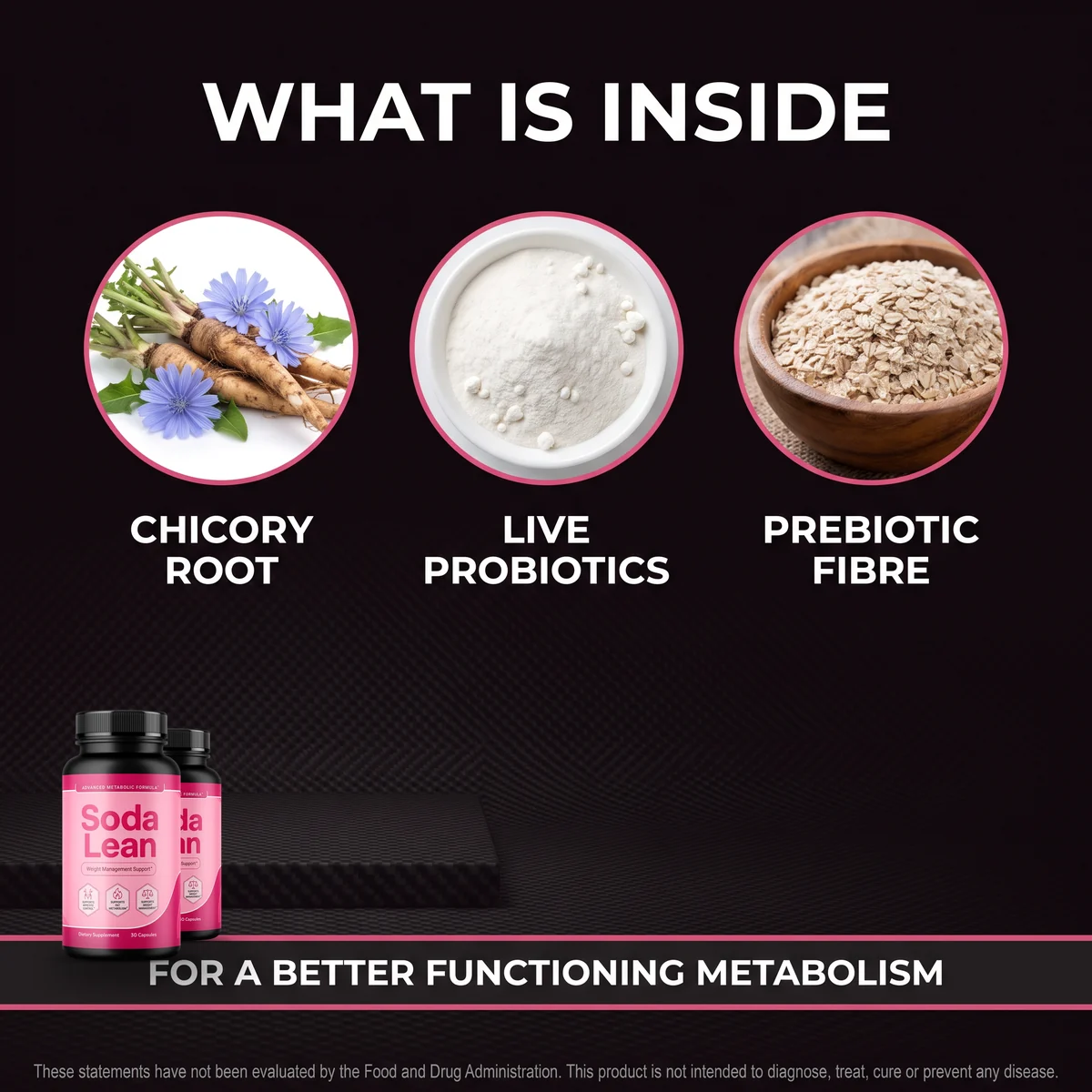
What makes B. lactis special among probiotics is its hardiness. Many probiotic bacteria are fragile and struggle to survive the acid of the stomach and the bile of the small intestine. B. lactis is unusually robust, which is one reason it survives capsule manufacturing, shelf storage and the journey through your digestive tract well enough to reach the large intestine, where the work happens. In SodaLean, B. lactis sits within a three-strain live probiotic blend alongside chicory root inulin and potato resistant starch — the fibres that give it something to feed on.
Bifidobacterium lactis benefits for weight loss: what the mechanisms are
Let us be clear up front, because honesty matters more than hype: B. lactis is not a fat burner, and any product that promises dramatic weight loss from a probiotic alone is overselling. What the research does support is a set of gentle, foundational mechanisms that make everyday weight management more achievable. Here is what is actually happening.
1. It supports digestion and regularity
Some of the most consistent research on B. lactis, particularly the HN019 and DN-173 010 strains, is in digestive comfort and transit time — how quickly food moves through the gut. Regular, comfortable digestion is not glamorous, but it is the platform everything else sits on. When the gut runs smoothly, people tend to feel less bloated and more inclined to stick with a sensible eating pattern.
2. It helps maintain a balanced gut barrier
The lining of your gut is a single-cell-thick barrier that decides what gets into your bloodstream. When that barrier is compromised, fragments of bacteria can leak through and trigger low-grade inflammation — a state repeatedly linked in research with insulin resistance and weight gain. Bifidobacteria help nurture the barrier, partly by producing and encouraging short-chain fatty acids that feed the cells lining the colon. We explore this pathway in depth in our guide to butyrate and short-chain fatty acids.
3. It shifts the balance of the microbiome
A probiotic does not just add its own numbers; it can change the wider ecosystem. By competing for space and resources and by acidifying the gut environment slightly, B. lactis can make conditions less friendly for less helpful microbes. A more diverse, Bifidobacteria-rich microbiome is associated in observational research with easier weight regulation, though cause and effect are still being untangled.
What human studies actually show
It is worth being precise about the evidence, because probiotics are an area where marketing often outruns data. A few honest reference points:
- ✓ Body-composition trials are mixed but promising. Some randomised trials of specific B. lactis strains report modest reductions in waist circumference or fat mass over several weeks, especially when combined with a controlled diet. Others show smaller effects. The signal is real but gentle.
- ✓ Strain matters enormously. Findings from one B. lactis strain do not automatically apply to another. The strain code — HN019, BB-12, Bi-07 — is not marketing fluff; it is the identity of the exact bacterium that was studied.
- ✓ Digestive endpoints are the strongest. The most reproducible benefits are in regularity, transit time and digestive comfort — the foundations that make a weight plan livable.
- ✓ It works best as part of a system. Trials that pair a probiotic with fibre and dietary change tend to show more than probiotic-only trials.
Bifidobacterium lactis vs other probiotic strains
B. lactis is one of several beneficial species you will meet on gut-health labels, and each has a slightly different reputation in the research. Lactobacillus species tend to live higher up in the small intestine, while Bifidobacterium species dominate the large intestine. For a strain studied specifically around abdominal fat, see our guide to Lactobacillus gasseri and belly fat. And for the next-generation strain generating the most metabolic-health headlines, read about Akkermansia muciniphila. The practical takeaway: a thoughtfully built multi-strain blend usually beats betting everything on one species.
Live probiotics plus prebiotic fibre, once daily
SodaLean™ pairs a live probiotic blend with chicory root inulin and potato resistant starch — a gut-first, once-daily capsule backed by a 60-day money-back guarantee.
See SodaLean Packages
Most people choose a 3- or 6-bottle supply so they do not run out mid-routine, since probiotic benefits build gradually.
How much Bifidobacterium lactis should you take?
There is no single official dose, and the honest answer is that it depends on the strain and the goal. Some useful anchors:
- ✓ Human trials commonly use somewhere between about 1 billion and 10 billion or more colony forming units (CFU) per day for a single strain.
- ✓ Blends share the total. In a multi-strain formula, the total CFU is divided across the strains on purpose so they work as a team. A lower per-strain number is normal and not a red flag.
- ✓ Consistency beats intensity. The gut rewards a steady daily habit far more than an occasional mega-dose. Judge a probiotic over weeks, not days.
- ✓ Feed it. A probiotic establishes more easily when a prebiotic fibre is present, which is why synbiotic formulas exist.
Whatever product you choose, follow the label directions. In SodaLean's case, the whole routine is a single vegetarian capsule taken with an 8 oz glass of water — deliberately simple so the habit actually sticks.
What to look for on a Bifidobacterium lactis label
Probiotic labels vary wildly in honesty. Before you buy, run this quick checklist:
- ✓ A full strain name. Look for the genus, species and strain code (for example Bifidobacterium lactis HN019), not just "probiotic blend".
- ✓ CFU at end of shelf life. The number that matters is the potency guaranteed through the expiry date, not merely "at time of manufacture," because live bacteria decline over time.
- ✓ A paired prebiotic. Inulin or resistant starch alongside the strains signals a synbiotic designed to actually feed what it delivers.
- ✓ Sensible packaging and storage guidance. Live cultures are sensitive to heat and moisture; a serious brand tells you how to store the product.
- ✓ Quality signals. Manufacturing in an FDA-registered, GMP-certified facility and non-GMO sourcing show the maker takes standards seriously.
If any of this feels overwhelming, our full walkthrough on how to read a gut health supplement label decodes CFU counts, strains and synbiotics in about a minute.

Who should be cautious?
B. lactis is one of the most widely consumed probiotics in the world and is well tolerated by most healthy adults. Still, a few groups should take extra care. Anyone who is pregnant or nursing, under 18, immunocompromised, seriously ill, or managing a health condition or medication should check with a qualified healthcare professional before starting any new supplement. Some people notice mild, temporary gas or bloating in the first few days as the gut adjusts; easing in gently usually smooths that out.
How to get the most from Bifidobacterium lactis
Feed your bacteria with real food. Eat a variety of plants across the week so your resident Bifidobacteria stay well fed and diverse. A supplement is a floor, not a ceiling.
Be patient. The microbiome can begin shifting within days, but steady, meaningful change builds over several weeks of consistency.
Pair it with the basics. Probiotics pay off most on a foundation of decent sleep, regular movement and enough fibre — the same habits that support appetite and metabolism generally. For the big picture, see how gut health affects weight loss.
The bottom line
Bifidobacterium lactis will not do the work for you, and it should never be marketed as a shortcut. What it offers is more durable: a hardy, well-studied probiotic that supports digestion, a balanced gut barrier and a healthier microbial mix — the quiet foundations that make appetite steadier and a sensible plan easier to keep. Choose a product that names its exact strain, guarantees its CFU through the expiry date, and pairs the bacteria with researched prebiotic fibre. Then give it the weeks of consistency it needs to earn its place in your routine.
This guide was written and fact-checked by the SodaLean Research Team — an independent group focused on gut health, metabolism and evidence-based weight management — and medically reviewed by Emily Gottfried. We read the primary research, translate it into plain language, and flag hype wherever we find it. We never promise miracle results, only clear, accurate information you can act on. Spotted something to correct? Email [email protected].
Frequently asked questions
Does Bifidobacterium lactis help you lose weight?
Bifidobacterium lactis is not a fat burner and should never be sold as one. It is a well-studied probiotic that supports digestion, regularity and a balanced gut barrier. Some human trials of specific B. lactis strains report modest improvements in body composition and waist measurements when combined with a sensible diet, but it works as a supporting habit rather than a stand-alone solution.
What is the difference between Bifidobacterium lactis and Bifidobacterium longum?
Both are species within the Bifidobacterium genus that naturally live in the human gut, but they are different species with different strengths. B. lactis is prized for its hardiness through stomach acid and its research in digestion and immune support, while B. longum is one of the first colonisers of the infant gut and is studied for barrier and mood-gut pathways. Many quality formulas include more than one Bifidobacterium species.
How many CFU of Bifidobacterium lactis should a supplement contain?
There is no single official dose. Human studies have used a wide range, commonly from about 1 billion to 10 billion or more colony forming units (CFU) per day for a given strain. In a multi-strain blend the total CFU is shared across strains by design, so a lower per-strain number is normal. Look for the CFU stated at end of shelf life, not only at time of manufacture.
Should you take Bifidobacterium lactis with a prebiotic?
Pairing a probiotic such as B. lactis with a prebiotic fibre like inulin or resistant starch is called a synbiotic approach. The prebiotic gives the beneficial bacteria something to eat, which can help them establish and produce helpful metabolites. Many gut-first formulas are built this way on purpose.
Is Bifidobacterium lactis safe to take daily?
For most healthy adults, B. lactis is well tolerated and is one of the most widely consumed probiotic species in the world, including in many yoghurts. Some people notice mild, temporary gas or bloating in the first days. Anyone pregnant or nursing, under 18, immunocompromised or managing a health condition should check with a qualified healthcare professional first.
References
- Hill C, et al. “Expert consensus document: The International Scientific Association for Probiotics and Prebiotics consensus statement on the scope and appropriate use of the term probiotic.” Nature Reviews Gastroenterology & Hepatology, 2014.
- Uchida M, et al. “Effect of fermented milk containing Bifidobacterium lactis on body composition and metabolic parameters.” Beneficial Microbes, 2017.
- Waller PA, et al. “Dose-response effect of Bifidobacterium lactis HN019 on whole gut transit time and functional gastrointestinal symptoms in adults.” Scandinavian Journal of Gastroenterology, 2011.
- Stenman LK, et al. “Probiotic with or without fiber controls body fat mass: a randomized controlled trial.” EBioMedicine, 2016.
- Koh A, et al. “From dietary fiber to host physiology: short-chain fatty acids as key bacterial metabolites.” Cell, 2016.
† These statements have not been evaluated by the Food and Drug Administration. This product is not intended to diagnose, treat, cure or prevent any disease. This article is for general information only and is not medical advice; consult a qualified healthcare professional before making changes to your diet or supplement routine.