Prebiotics vs Probiotics vs Postbiotics: What's the Difference for Weight Loss?

Updated August 23, 2026 · reviewed by the SodaLean Research Team
| Probiotics | Live beneficial bacteria you add to your gut — the workers. |
| Prebiotics | The fibres those bacteria eat, such as inulin and resistant starch — the food. |
| Postbiotics | The helpful compounds bacteria make, like short-chain fatty acids — the output. |
| For weight | None is a fat burner; together they support appetite, the gut barrier and steadier metabolism. |
Walk down any supplement aisle and the labels blur together: prebiotics, probiotics, postbiotics, synbiotics. They sound almost interchangeable, but they describe three genuinely different things that work as a team inside your gut. Understanding the difference is the single fastest way to stop wasting money on the wrong product. This guide breaks down prebiotics vs probiotics vs postbiotics in plain language, shows how each connects to appetite and weight, and explains how to spot them on a label so you can tell a thoughtful formula from a marketing gimmick.
The one-sentence version
If you remember nothing else, remember this analogy: probiotics are the workers, prebiotics are their food, and postbiotics are the useful output of their work. Add beneficial bacteria (probiotics), feed them the right fibre (prebiotics), and they produce the beneficial compounds (postbiotics) that do much of the real metabolic good. Miss any one link and the chain weakens.
What are probiotics?
Probiotics are live micro-organisms that, in adequate amounts, confer a health benefit. In practice that means specific, named strains of beneficial bacteria — Lactobacillus and Bifidobacterium species, and newer entrants like Akkermansia. You add them to reinforce the population already living in your gut.
Because their effects are strain-specific, the details matter. A probiotic label should name the genus, species and strain (for example Bifidobacterium lactis HN019) and state the potency in colony forming units (CFU) guaranteed through the expiry date. We cover two well-studied strains in our guides to Bifidobacterium lactis and Lactobacillus gasseri and belly fat. On their own, probiotics mainly support digestion, regularity and a balanced gut barrier — the foundations of easier weight management, not a fat-loss shortcut.
What are prebiotics?
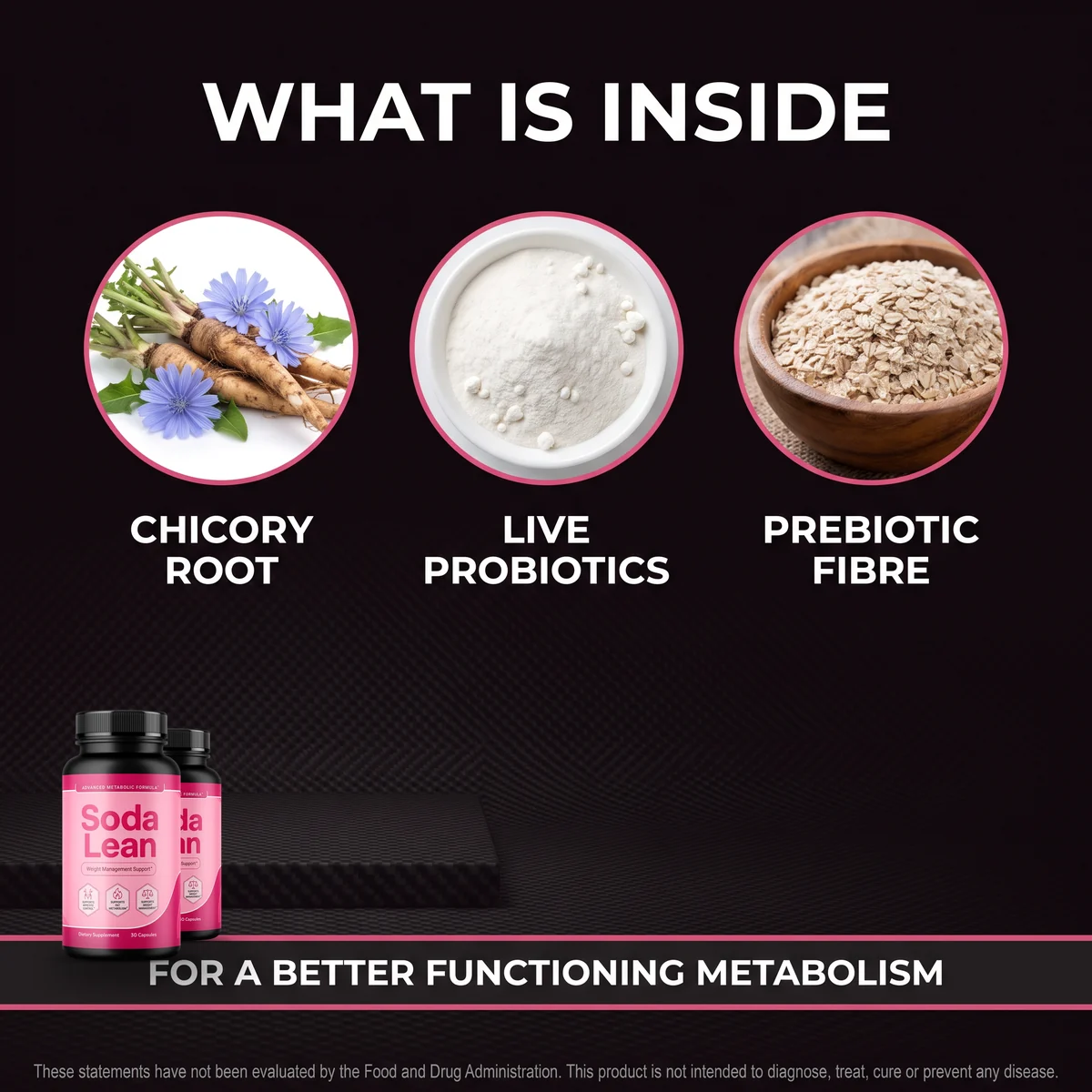
Prebiotics are the food source for your beneficial bacteria — usually specific soluble fibres your own digestive enzymes cannot break down. Because you cannot digest them yourself, they travel intact to the large intestine, where bacteria ferment them. Classic examples include chicory root inulin and potato resistant starch.
Prebiotics matter for weight in two direct ways. First, soluble fibre adds gentle bulk and slows stomach emptying, which supports fullness and steadier appetite. Second, fermenting that fibre is exactly what produces the beneficial postbiotics discussed below. We go deep on the two most common prebiotic fibres in our guides to chicory root inulin and potato resistant starch. A key point: a probiotic without a prebiotic is like hiring workers and forgetting to feed them.
What are postbiotics?
Postbiotics are the newest term of the three, and the most misunderstood. They are the beneficial compounds your bacteria produce when they ferment prebiotic fibre — most importantly the short-chain fatty acids (SCFAs) acetate, propionate and, above all, butyrate. These are not bacteria and not fibre; they are the metabolic payoff.
Postbiotics are where a lot of the actual weight-relevant action lives. SCFAs nourish the cells lining your colon, help maintain the gut barrier, and signal the release of satiety hormones like GLP-1 and PYY — the body's own "I have had enough" messages. In other words, the appetite and metabolic benefits people hope to get from probiotics are, to a large degree, delivered by postbiotics. We unpack this in detail in our guide to butyrate and short-chain fatty acids. You can buy isolated postbiotics, but for most people the smarter, cheaper route is to feed your own bacteria enough prebiotic fibre so they make their own.
All three, working together, once a day
SodaLean™ is built as a synbiotic: chicory root inulin and potato resistant starch (prebiotics) feed a live probiotic blend, supporting your body's own postbiotic production — in one daily capsule, backed by a 60-day money-back guarantee.
See SodaLean Packages
Most people choose a 3- or 6-bottle supply so the whole synbiotic system has time to work.
Prebiotics vs probiotics vs postbiotics: a side-by-side
Here is the same information in the way people usually search for it — a direct comparison:
- ✓ What it is: Probiotics = live bacteria. Prebiotics = fibre food. Postbiotics = bacterial output (mainly SCFAs).
- ✓ Where it acts: Probiotics colonise or pass through the gut; prebiotics are fermented in the large intestine; postbiotics act on gut cells and appetite hormones.
- ✓ Common examples: Probiotics — Lactobacillus, Bifidobacterium, Akkermansia. Prebiotics — inulin, resistant starch, FOS, GOS. Postbiotics — butyrate, acetate, propionate.
- ✓ Role in weight: Probiotics support digestion and barrier; prebiotics support satiety and feed the system; postbiotics drive much of the appetite-hormone and metabolic signalling.
- ✓ Best used: Together. A prebiotic + probiotic combination is a synbiotic, and it is generally the most sensible starting point.
So which one should you take for weight?
The honest answer is that "prebiotic vs probiotic" is mostly a false choice. Because they depend on each other, the most practical approach for most people is a synbiotic — prebiotic fibre plus live strains — which naturally supports your own postbiotic production. Buying an isolated postbiotic can make sense in specific cases, but it is often the most expensive way to get something your body will make for free if you feed it properly.
Whatever you choose, keep expectations grounded. None of these three is a fat burner. What they do is support the gut ecosystem that quietly influences appetite, energy and how your body handles food. For the bigger picture, see how gut health affects weight loss.

How to spot them on a label
- ✓ Probiotics: full strain names and CFU guaranteed through the expiry date, not just at manufacture.
- ✓ Prebiotics: a named fibre source (chicory root inulin, potato resistant starch) with a clear per-serving amount, not a vague "fibre blend."
- ✓ Postbiotics: if listed, they should be named specifically (for example a butyrate compound), though many good formulas rely on feeding your own bacteria instead.
- ✓ Synbiotic design: prebiotic and probiotic together is a green flag that someone thought about how the parts interact.
For a full one-minute walkthrough of CFU, strains and blends, see how to read a gut health supplement label.
Who should be cautious?
Prebiotics, probiotics and postbiotics are well tolerated by most healthy adults, though some people notice temporary gas or bloating when starting prebiotic fibre — usually eased by starting low and building up with plenty of water. Anyone who is pregnant or nursing, under 18, immunocompromised, seriously ill, or managing a health condition or medication should consult a qualified healthcare professional before adding any new supplement.
The bottom line
Prebiotics, probiotics and postbiotics are not competitors; they are three parts of one system. Probiotics are the beneficial bacteria, prebiotics are the fibre that feeds them, and postbiotics — especially short-chain fatty acids like butyrate — are the beneficial compounds that carry much of the metabolic and appetite benefit. For weight management, the smartest move is rarely to pick one in isolation but to support the whole chain: feed good bacteria the right fibre so they can do their job. Read the label, favour synbiotic designs that name their strains and fibres, and give the system the weeks of consistency it needs.
This guide was written and fact-checked by the SodaLean Research Team — an independent group focused on gut health, metabolism and evidence-based weight management — and medically reviewed by Emily Gottfried. We read the primary research, translate it into plain language, and flag hype wherever we find it. We never promise miracle results, only clear, accurate information you can act on. Spotted something to correct? Email [email protected].
Frequently asked questions
What is the difference between prebiotics, probiotics and postbiotics?
Probiotics are live beneficial bacteria you add to your gut. Prebiotics are the fibres those bacteria eat, such as inulin and resistant starch. Postbiotics are the beneficial compounds the bacteria produce when they ferment prebiotics, such as short-chain fatty acids like butyrate. In short: probiotics are the workers, prebiotics are their food, and postbiotics are the useful output of their work.
Which is better for weight loss, prebiotics or probiotics?
Neither is a fat burner, and the question is a bit of a false choice. Prebiotics support appetite and satiety by feeding bacteria and adding gentle bulk, while probiotics support digestion and a balanced gut barrier. They work best together as a synbiotic, and much of the actual metabolic benefit comes from the postbiotics that result. For most people a combined, gut-first approach makes more sense than choosing one.
Do I need a postbiotic supplement?
Not necessarily. Your own gut bacteria produce postbiotics such as short-chain fatty acids naturally when you feed them enough prebiotic fibre. Supplementing prebiotics and probiotics together is one practical way to support your body's own postbiotic production, rather than buying isolated postbiotics.
Can you take prebiotics and probiotics at the same time?
Yes. Taking them together is called a synbiotic approach and is often preferred, because the prebiotic gives the probiotic bacteria something to eat, which can help them establish and produce beneficial postbiotics. Many gut-first formulas combine both in a single daily capsule by design.
Are postbiotics the same as short-chain fatty acids?
Short-chain fatty acids such as butyrate, acetate and propionate are among the most important and best-studied postbiotics, but the postbiotic category is broader and also includes other bacterial metabolites and cell components. When people discuss postbiotics for metabolism, they are usually talking about short-chain fatty acids.
References
- Hill C, et al. “The ISAPP consensus statement on the scope and appropriate use of the term probiotic.” Nature Reviews Gastroenterology & Hepatology, 2014.
- Gibson GR, et al. “The ISAPP consensus statement on the definition and scope of prebiotics.” Nature Reviews Gastroenterology & Hepatology, 2017.
- Salminen S, et al. “The ISAPP consensus statement on the definition and scope of postbiotics.” Nature Reviews Gastroenterology & Hepatology, 2021.
- Koh A, et al. “From dietary fiber to host physiology: short-chain fatty acids as key bacterial metabolites.” Cell, 2016.
- Swanson KS, et al. “The ISAPP consensus statement on the definition and scope of synbiotics.” Nature Reviews Gastroenterology & Hepatology, 2020.
† These statements have not been evaluated by the Food and Drug Administration. This product is not intended to diagnose, treat, cure or prevent any disease. This article is for general information only and is not medical advice; consult a qualified healthcare professional before making changes to your diet or supplement routine.